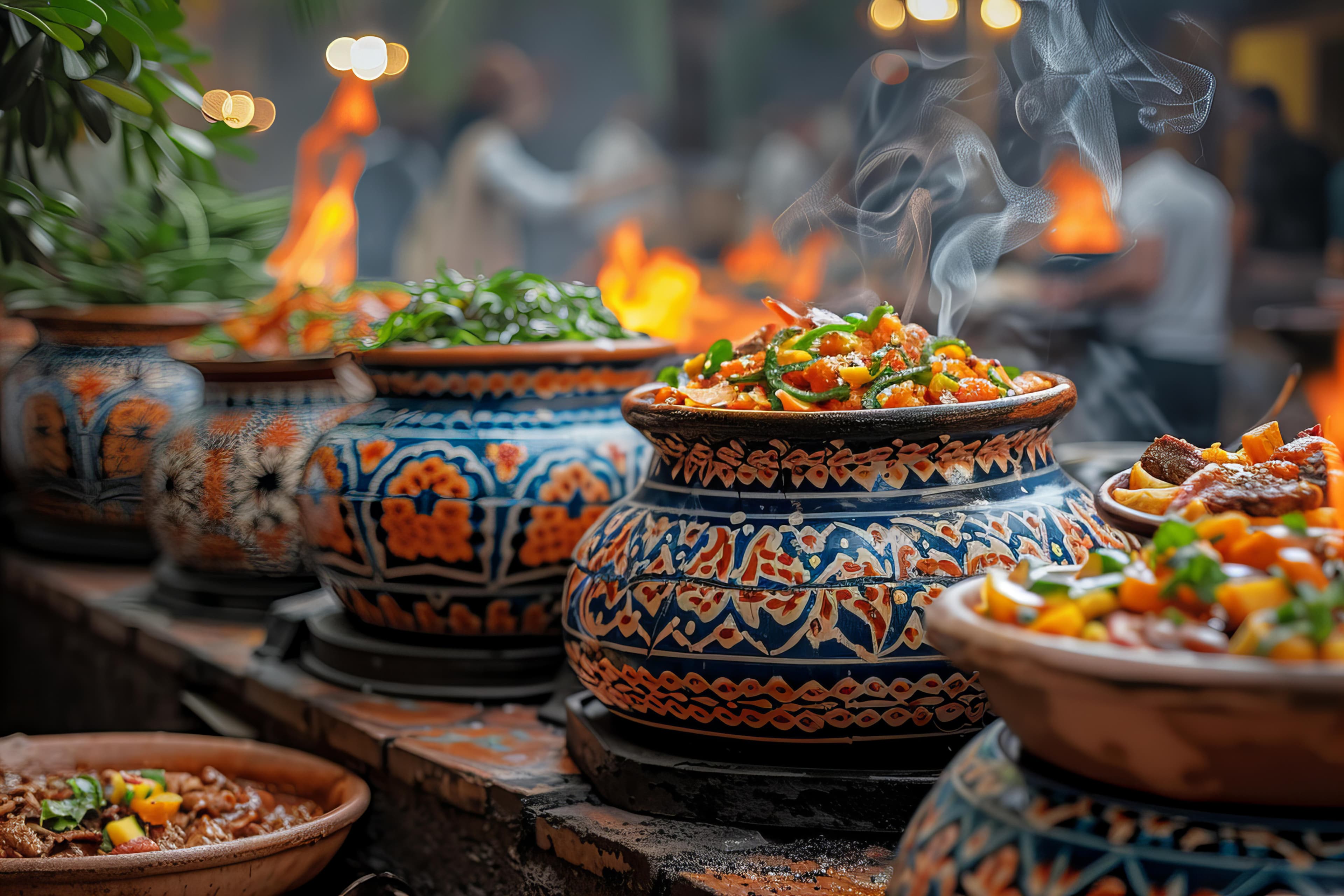
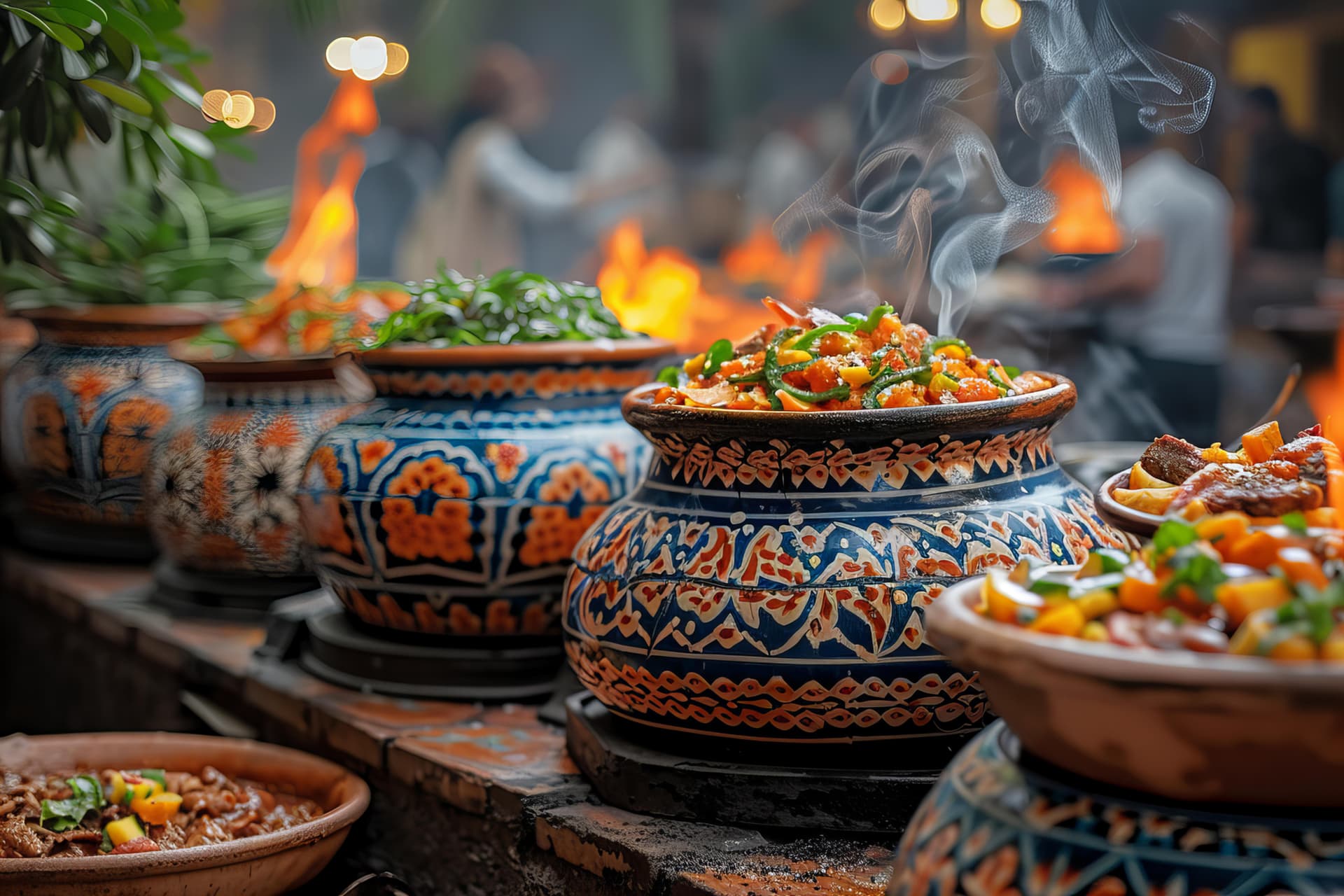
Jodhpur's food culture operates on a different logic from most Indian cities. The street food here is not an alternative to restaurant dining — it is the reason to be in the old city. The Clock Tower market, the lanes surrounding Sardar Market, the milk shops near the fort walls — these are the food destinations. The restaurants are secondary.
This guide is structured in the order a day in Jodhpur should actually go, with food built into the itinerary rather than appended to it.
Shri Mishrilal Hotel near Jalori Gate is where Jodhpur has its makhania lassi. This is not marketing. The lassi here — thick, sweetened with sugar and saffron, topped with a dense layer of malai cream, served in a heavy clay kulhad — is a different preparation from the standard Rajasthani lassi and has been made to the same recipe since 1927.
Arrive before 9 AM to avoid the queue that forms by mid-morning. The lassi is the only thing they make. Order one, find a standing spot on the pavement outside, and consider whether you need another immediately.
Mishrilal is on Station Road near Jalori Gate — 10 minutes' walk from the Clock Tower. It is worth the detour.
The Clock Tower (Ghanta Ghar) at the centre of Jodhpur's old city is the anchor for the morning food walk. The lanes radiating from it in every direction are the city's wholesale and retail market — spices, textiles, sweets, pickles, fresh vegetables, and the tea stalls that punctuate every 50 metres.
Mirchi Bada is Jodhpur's most famous street food and the one that best explains the city's relationship with chilli — which is to say, celebratory rather than cautionary. A large green chilli, seeded and stuffed with a spiced potato filling, dipped in gram flour batter and deep-fried until golden. The result is simultaneously fiery and satisfying, the chilli heat moderated by the filling without being eliminated.
The stalls near the Clock Tower, particularly along Nai Sarak and the lanes toward Tripolia Bazaar, fry mirchi bada from 8 AM onwards. Eat standing at the stall. Rs 15 to 20 per piece.
The kachori at Jodhpur — the pyaaz (onion) kachori in particular — is a specific preparation. A deep-fried pastry shell filled with a heavily spiced caramelized onion mixture, served with tamarind and green chutney. It is heavier than it looks and better eaten at 10 AM than as a late-night snack.
Janta Sweet Home near the Clock Tower is the standard reference for pyaaz kachori. Open from 7 AM.
Dal Baati Churma is Rajasthan's defining meal and Jodhpur is the right place to eat it. The dish has three components: baati (hard wheat flour balls baked in a wood-fired oven or traditionally in desert sand), panchkuti dal (five lentils slow-cooked with ghee and spices), and churma (coarsely ground roasted wheat mixed with ghee and jaggery). They are eaten together or in sequence: the dal poured over the broken baati, the churma as a sweet counterpoint.
The combination of the textures — the crust of the baati, the richness of the dal, the crumble of the churma — and the generous ghee that ties all three together makes this a meal rather than a snack.
Gypsy Restaurant on Circuit House Road is the most consistent kitchen for dal baati churma in Jodhpur, serving the traditional preparation with sufficient ghee rather than the reduced version that some restaurants serve to tourists.
Jhankar Choti Haveli Restaurant near Mehrangarh Fort serves a version in a courtyard setting that adds the Jodhpur atmosphere to the meal.
Mawa Kachori is Jodhpur's specific contribution to Indian sweets and the one that visitors from other cities find most surprising. A deep-fried pastry filled with mawa (reduced milk solids), dry fruits, and cardamom, then soaked in sugar syrup until the shell softens and the filling becomes almost molten. It is sweet in the way that only Rajasthani sweets are sweet — deliberately and completely.
Rawat Mishthan Bhandar on Station Road is the address. Open from 8 AM. Also serves standard Rajasthani sweets (ghewar, churma, mohanthal) of the same quality.
Mehrangarh Fort, visible from most of the old city, turns gold at sunset from the west. The rooftop restaurants in the lanes below the fort — primarily on the street that runs between Tripolia Gate and the Sardar Market — are positioned directly for this view.
Indique Restaurant at the Pal Haveli is the standard rooftop recommendation — the fort is directly above, the food (Rajasthani thali and North Indian) is competent, and the view at 6 to 7 PM makes it worth the restaurant prices.
The Jhankar Rooftop at Hotel Haveli Inn Pal is a similar setting at lower prices with a more local clientele.
Amritara Manak Haveli's own rooftop restaurant, looking directly onto Mehrangarh Fort from Goldsmith Lane, is worth considering for guests — the location is inside the old city and the fort view is direct, without the intervening buildings that the street-level restaurants look over.
The evening walk through the Clock Tower market — when the day's heat has gone, the stalls are lit by bare bulbs, and the spice sellers are packing up — is the time to try whatever you missed in the morning. The pyaaz kachori stalls reopen from around 5 PM. The mirchi bada continues.
If you missed the makhania lassi at Mishrilal in the morning, they also serve in the evening. The malai layer is thicker in the cooler temperature.
Jaipur's food is more urban and diverse. Udaipur's tourist restaurant scene is more developed. Jaisalmer's options are limited by the logistics of the desert. Jodhpur sits between them — a large, active trading city with an intact street food culture that has not been diluted by tourist catering, and a location on the spice route that makes the raw ingredients available at source prices.
The ghee quality here is different. The Jodhpur spice market sells directly from the farms that supply most of northern India's cardamom and red chilli. This is tangible in the food.
Manak Haveli is located in Goldsmith Lane in the heart of the old city — the rooftop restaurant looks directly at Mehrangarh Fort and the Clock Tower market is a 5-minute walk. Every food stop in this guide is reachable on foot from the property. The haveli has a library, manicured gardens, a rooftop jacuzzi, and the Maharani Room for guests who want the full heritage experience.
Staying inside the old city and walking to the food rather than driving to it is the correct way to eat in Jodhpur. Manak Haveli is the right base for it.
Book Amritara Manak Haveli, Jodhpur
Inside the Blue City — book at amritara.co.in
What is the most famous food in Jodhpur?
Mirchi Bada (stuffed chilli fritters) and Makhania Lassi are Jodhpur's signature foods. Dal Baati Churma is the defining Rajasthani meal that Jodhpur does best. Pyaaz Kachori (onion-filled pastry) is the essential morning street food.
Where is the best place for Makhania Lassi in Jodhpur?
Shri Mishrilal Hotel near Jalori Gate. Open from morning until the lassi sells out. Arrive before 9 AM to avoid queues. The 1927 recipe has not changed. It is served only in kulhad (clay cups) and only sweet — there is no savoury option.
What is Dal Baati Churma?
Rajasthan's defining dish: hard wheat flour balls (baati) baked in a wood oven, served with a five-lentil dal poured over them and churma (coarsely ground roasted wheat with ghee and jaggery) as a sweet accompaniment. Eaten together. The quality depends on the ghee — good Jodhpur dal baati is generous with it.
Where is the Clock Tower market in Jodhpur?
Ghanta Ghar (the Clock Tower) is the central landmark of Jodhpur's old city, approximately 1.5 km from the base of Mehrangarh Fort. Sardar Market surrounds it. The main street food lanes — for mirchi bada, kachori, and sweets — radiate from this point along Nai Sarak and toward Tripolia Bazaar.
Are there good vegetarian restaurants in Jodhpur?
Jodhpur is predominantly vegetarian in its traditional food culture — dal baati churma, kachori, lassi, and most sweets are all vegetarian. Gypsy Restaurant for dal baati churma, Janta Sweet Home for kachori, and Rawat Mishthan Bhandar for sweets are all exclusively vegetarian and consistently reliable.